 About us
 Services
 Projects
 Blogs
Blogs


The Customer Who Never Saw Your Website
A potential customer clicks your Google ad. Your page starts
loading. Progress bar moves. Three seconds pass.
They tap the back button and click your competitor's result
instead.
Your page finishes loading at 8 seconds - to an empty tab.
The customer is already browsing a faster site. They'll never know what you
were offering.
This isn't impatience. This is modern user behavior. And
it's costing slow websites half their traffic.
The 3-Second Threshold
Google research shows 53% of mobile users abandon sites that
take more than 3 seconds to load.
Think about that: More than half your mobile visitors - who
now constitute 70%+ of traffic - leave before seeing anything if load time
exceeds 3 seconds.
Every second of delay beyond that increases abandonment. At
5 seconds, you've lost most casual browsers. At 8 seconds, only the most
determined visitors remain.
The visitors who leave don't come back. They don't bookmark
you for later. They've already found an alternative.
What 8 Seconds Actually Costs
Let's quantify for a typical business:
Monthly website visitors: 5,000 Mobile visitors (70%): 3,500
Current load time: 8 seconds Abandonment at 8 seconds: ~70%
Visitors actually seeing your site: ~1,050 (instead of
3,500)
If your load time were under 3 seconds, abandonment might be
30%: Visitors seeing your site: ~2,450
That's 1,400 additional visitors per month - people who
clicked but never saw your content.
At even 2% conversion rate and ₹5,000 average order value:
Lost monthly revenue: 1,400 × 2% × ₹5,000 = ₹1,40,000
Annual cost of slow loading: ₹16.8 lakhs
For a problem that's often fixable for under ₹50,000.
Why Pages Load Slowly
Speed problems typically come from specific, fixable issues:
Unoptimized images are the most common culprit. A 5MB hero
image that could be 200KB with proper compression. Product photos uploaded
directly from camera without resizing.
Cheap hosting with shared resources. When 100 websites share
a server, each gets slow during peak times.
Too many third-party scripts. Analytics, chat widgets,
social media buttons, advertising pixels - each adds load time.
Unminified code. CSS and JavaScript files with extra
whitespace and comments that add unnecessary kilobytes.
No caching configuration. The same files downloaded fresh
every visit instead of stored locally.
Render-blocking resources. JavaScript that must complete
before the page can display.
The Manufacturing Website Fix
A manufacturing company's product page loaded in 9.5 seconds
on mobile.
Analysis revealed:
- Hero
image: 4.2MB (uncompressed)
- Product
photos: 1-2MB each (12 on page)
- Chat
widget: Adding 1.5 seconds
- Google
Fonts: 4 font weights loading
Fix implemented:
- Images
compressed to under 200KB each
- Lazy
loading for below-fold images
- Chat
widget delay-loaded after page ready
- Fonts
reduced to 2 weights
New load time: 2.8 seconds
Bounce rate improvement: 35% reduction Page views per
session: +40% Quote requests: +28%
The products, content, and design were identical. Only speed
changed.
Quick Wins for Speed
Test your current speed at Google PageSpeed Insights (free).
Note the specific recommendations.
Compress images before uploading. TinyPNG or similar tools
reduce file size 60-80% without visible quality loss.
Enable browser caching. Most hosting panels have one-click
options.
Upgrade hosting if necessary. The difference between
₹200/month hosting and ₹1,000/month hosting is often 3-4 seconds of load time.
Delay non-essential scripts. Chat widgets, analytics, and
social buttons don't need to load before your main content.
Consider a CDN for static assets. Content Delivery Networks
serve files from locations closer to users.
Key Takeaways
- 53%
of mobile users leave if page takes more than 3 seconds
- 8-second
load times can lose 70% of mobile visitors
- Image
optimization alone often reduces load time by 50%
- Speed
improvements directly correlate with conversion improvements
- The
cost of fixing speed is typically 10-20% of one month's lost revenue
The Bottom Line
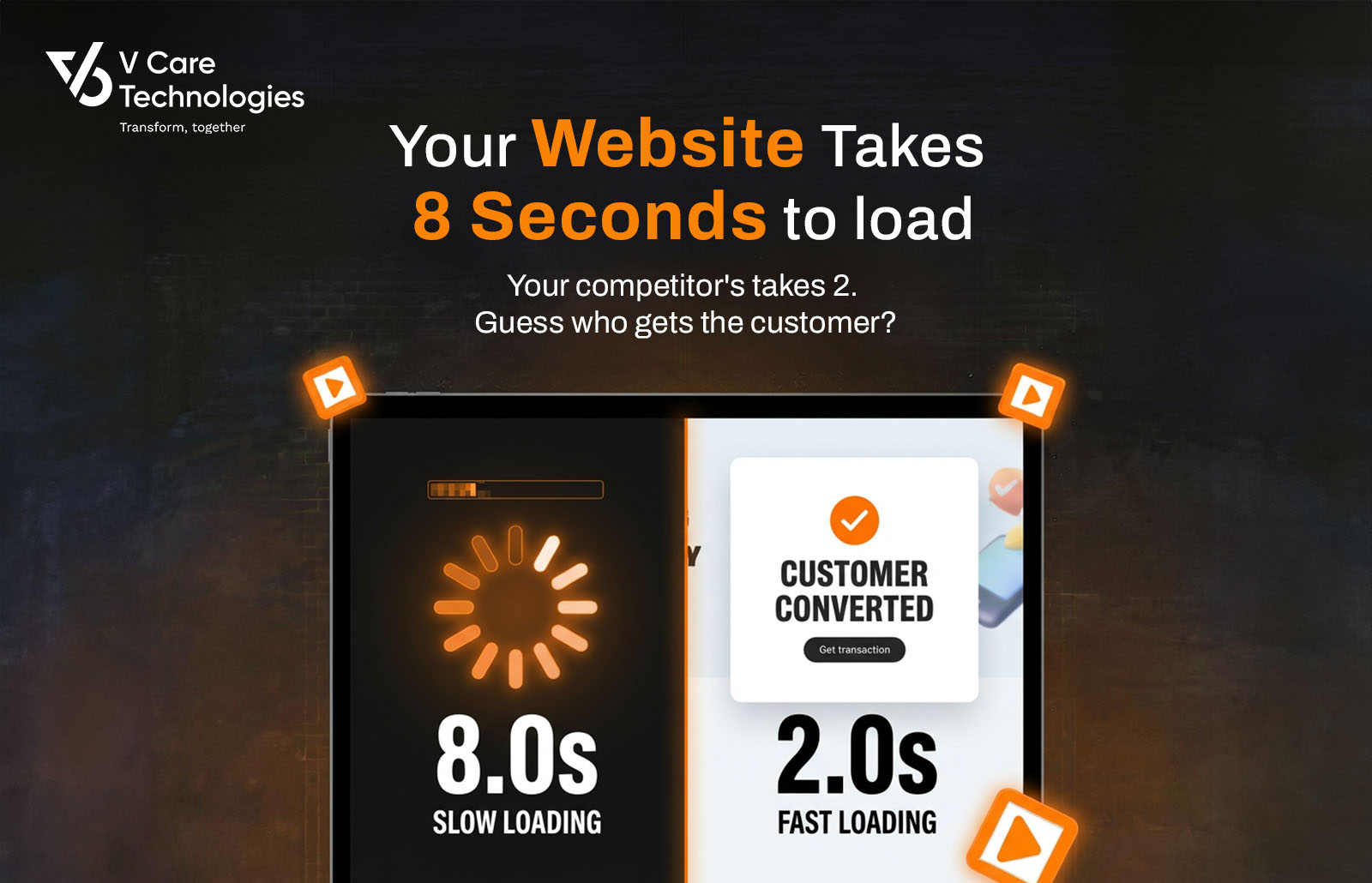
Your website takes 8 seconds to load. Your
competitor's takes 2. When someone searches and clicks both results, your
competitor wins before you've even appeared. Speed isn't a technical detail for
developers to worry about. It's a business problem that's costing you customers
every day. Every second your page takes to load, customers are deciding you're
not worth the wait.